

How Can Tyvek Tote Bags Deliver Long-Term Durability and Sustainable Value?
Tyvek tote bags have become a high-visibility category across global retail, corporate gifting, events, and sustainable packaging because they merge lightweight construction with high tensile strength, water resistance, and a distinct modern aesthetic.
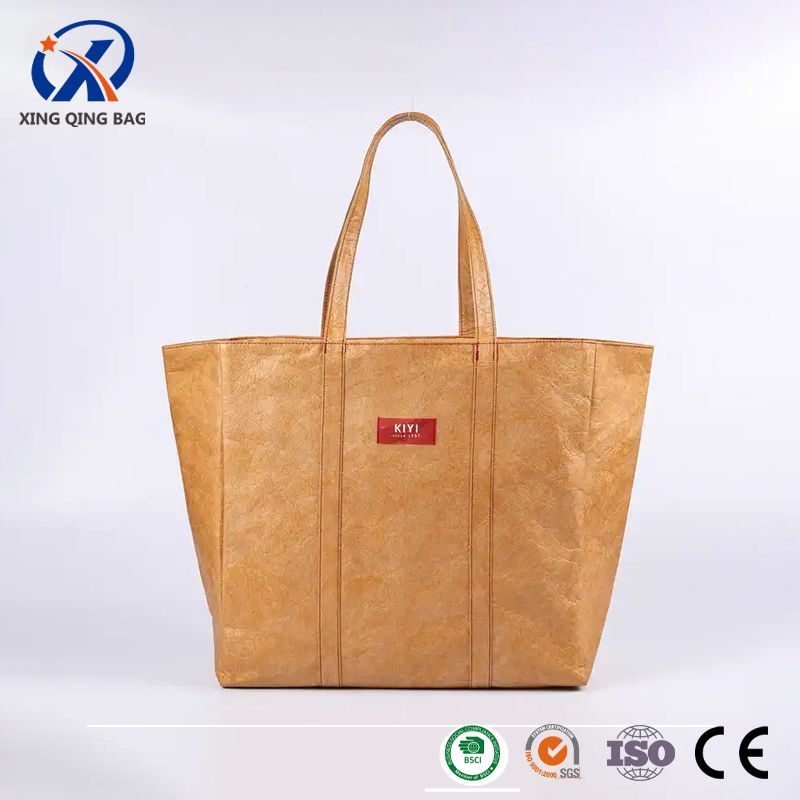
Product Specifications for Tyvek Tote Bags
The following parameters outline the standard manufacturing and performance metrics commonly required by buyers in the United States, Europe, and Southeast Asia industrial markets:
| Parameter | Specification |
|---|---|
| Material Type | High-density polyethylene non-woven (DuPont Tyvek) |
| Available Grades | 1056D, 1073D, 1443R, and custom-laminated composites |
| Weight Range | 42–75 gsm (standard), 105gsm+ (reinforced) |
| Dimensions | Customizable; common formats include 35x40 cm, 40x45 cm, and oversized 45x50 cm |
| Handle Options | PP woven straps, cotton webbing, Tyvek folded straps, or reinforced double-layer handles |
| Handle Length | 40–70 cm depending on shoulder or hand-carry design |
| Load Capacity | 5–20 kg depending on reinforcement method |
| Closure Options | Open top, zipper, snap, drawstring |
| Printing Methods | Digital, screen printing, heat transfer, CMYK high-resolution |
| Water Resistance | High; repels light rain and splashes |
| Recyclability | 100% recyclable as HDPE |
| Target Use Cases | Retail packaging, promotional events, conferences, outdoor activities, travel, daily carry |
How Does Tyvek Technology Influence the Functional Performance of Tote Bags?
Understanding Tyvek requires examining its structural engineering. Although it resembles paper visually, Tyvek is a spunbonded sheet of continuous high-density polyethylene fibers. These fibers are thermally bonded, creating a material that is simultaneously breathable and resistant to moisture, tearing, and abrasion. This combination is not commonly found in natural fabrics or standard synthetics.
The core performance attributes are driven by three technical mechanisms:
-
Fiber-to-fiber entanglement: Continuous strands disperse tension rather than breaking pointwise.
-
Microporous architecture: Allows vapor transmission, preventing moisture accumulation inside the bag.
-
Non-woven bonding: Ensures dimensional stability and resistance to deformation even with repeated use.
These characteristics make Tyvek tote bags a strong candidate for markets requiring durability with minimal weight. Buyers frequently select Tyvek when they require a more robust option than kraft paper bags and a more sustainable alternative to traditional polypropylene totes.
Longevity Considerations
Because Tyvek is inherently resistant to puncture and tearing, the service life of a tote bag is significantly extended, particularly for applications involving books, electronics, cosmetics, groceries, or conference materials. In addition, Tyvek’s structural integrity remains stable under UV exposure, which makes the bags suitable for outdoor events, sports activities, and travel.
How Do Tyvek Tote Bags Compare to Conventional Fabric and Synthetic Bags?
Buyers evaluating tote bag materials typically compare Tyvek against cotton canvas, polyester, nylon, non-woven polypropylene, and kraft-paper-style laminates. Each provides distinct advantages, but Tyvek often achieves a stronger balance of weight, resilience, and aesthetics.
Performance Comparison
Weight Efficiency:
Tyvek bags deliver comparable strength at a fraction of the weight of cotton canvas, reducing logistics costs and improving consumer usability.
Moisture Management:
Whereas cotton absorbs moisture and polyester can trap humidity inside a bag, Tyvek’s microporous structure repels water while remaining breathable. Contents stay well-protected under variable weather conditions.
Tear Resistance:
Polypropylene and kraft laminates can show wear quickly at fold points. Tyvek maintains structural integrity even with repeated folding and high stress loads.
Print Performance:
Tyvek accepts high-resolution CMYK printing with sharp edges and strong color density. The surface texture allows branding to appear more refined than on coarse canvas or low-grade non-woven bags.
Sustainability Analysis
Tyvek is fully recyclable as HDPE, giving it a more circular lifecycle compared with polyester or mixed-material totes. Cotton is often perceived as sustainable, but its large water consumption and energy-intensive production create a heavy upstream environmental load. As a result, Tyvek offers a unique equilibrium between durability and reduced environmental impact.
How Is the Market for Tyvek Tote Bags Evolving and What Trends Are Shaping Buyer Expectations?
Industry adoption has accelerated due to regulatory changes, retail sustainability commitments, and growing consumer awareness. The market trajectory can be described in three operative domains: design, sourcing, and functional enhancement.
1. Design Direction
Minimalist styling has become the dominant trend, particularly in major U.S. metropolitan markets. Brands are using monochrome palettes, structural shapes, and oversized silhouettes to reflect contemporary retail aesthetics. Tyvek’s crisp texture reinforces this style preference and differentiates the bags from traditional fabric totes.
2. Corporate and Event Procurement
Tyvek tote bags are now widely selected for large conferences, exhibitions, fitness events, and universities because they withstand high-volume usage and maintain a premium feel. The lightweight structure reduces bulk during transportation, while large surface areas accommodate promotional graphics and sponsor branding.
3. Functional Innovation
Manufacturers are integrating zipper closures, interior pockets, reinforced bases, and laminated composites that combine Tyvek with PET or woven fabrics. These innovations elevate the bags from lightweight carriers to multi-purpose tools suitable for traveling, commuting, or outdoor recreation.
4. Future Direction
Advancements in recyclable coatings, biodegradable inks, and composite structures are expected to broaden Tyvek’s applications. Buyers will increasingly seek bags that maintain strength but include upgraded tactile finishes, enhanced shape memory, or advanced colorfastness. AI-driven print customization in retail environments will also push demand for small-batch, high-resolution designs.
How Can Buyers Evaluate Quality and Select the Right Tyvek Tote Bag for Their Intended Use?
Procurement decisions should consider tensile strength, manufacturing precision, strap durability, and print stability. The following criteria are essential:
Material Grade Verification
Different Tyvek grades have different performance thresholds. High-stress applications such as travel totes or grocery carriers require grades with increased tear resistance.
Handle Construction
Handles should be reinforced at stress points, preferably with cross-stitching. Double-layer woven straps deliver greater longevity for loads above 10 kg.
Manufacturing Accuracy
Edge sealing must be uniform, especially for ultrasonic or heat-press seams. Uneven or weak sealing can reduce load capacity.
Print and Colorfastness Assessment
High-resolution printing helps maintain a premium appearance. Buyers should confirm whether the printing method matches intended brand presentations and whether colors remain stable under UV exposure.
Frequently Asked Questions About Tyvek Tote Bags
Q: How should Tyvek tote bags be cleaned without damaging the material?
A: Tyvek should be cleaned using a mild soap solution and a soft cloth. Harsh chemical detergents, machine washing, or strong solvents can weaken fiber bonding. A light surface wipe is sufficient to remove dirt or stains while preserving material integrity and appearance.
Q: How long can a Tyvek tote bag typically last under regular use?
A: Under normal daily activity—including carrying books, groceries, or personal items—a Tyvek tote bag can last several years. The lifespan depends on reinforcement quality, handle construction, and load frequency. Bags made with thicker Tyvek grades or laminated reinforcements offer extended durability suitable for heavy-duty use.
Conclusion and Brand Integration
As demand continues to shift toward lightweight, high-strength, and recyclable packaging solutions, Tyvek tote bags represent a compelling synthesis of durability, design adaptability, and operational efficiency. Their unique fiber structure supports high performance across consumer, corporate, and industrial use cases. The category continues to evolve as manufacturers introduce advanced laminations, reinforced architecture, and design-forward customization options.
Xingqing offers a comprehensive range of Tyvek tote bags engineered for consistency, structural strength, aesthetic clarity, and scalable production. Buyers seeking dependable manufacturing, controlled quality, and flexible customization options can leverage Xingqing’s capabilities to support both small-batch and large-volume procurement.
For tailored specifications, bulk quotations, or private-label development, contact us.